Friday, August 31, 2018

How to Notarize Documents Abroad

STAMP! Image: Unsplash

Notarizing documents abroad can be confusing.

If you are living in another country, you will eventually need to notarize something. Whether it's or your visa application or for your new international mail solution (more about that later!) you will need to get your paperwork stamped + looking official. Here are three options for expats from the US like myself.

1. Local Notary Public

You can use a notary public service in the country where you are living. As an expat you can use a local form of identification or a passport.

The price varies a lot from country to country. In the Czech Republic, I use JUDr. Sylva Kotrbova and she charges less than CZK 200 for basic notarization of one document. She is professional and best of all, super quick about it.

Once I had to get something notarized in London and it was considerably more expensive. I used MD Pryke for GBP 60 after calling around to 6+ notaries whose prices ranged up to GBP 120. Some British notaries public also require an apostille for international documents, which can run double. Yikes. Most of the notaries I found in England were actual lawyers, so maybe that's why the price is high.

2. U.S. Embassy Notarization

Every U.S. Embassy has notaries on staff as part of their American Citizen Services. This is important because for U.S. documentation to be legal, it needs to be notarized by a U.S. authority. If you are submitting federal or state paperwork from abroad, you will likely need a U.S. authorized notarization.

I used this notary service in Bangkok, Thailand back in 2015. I had to write a statement verifying that my BA degree and my passport matched in order to apply for my long-term visa and work permit. You need to get an appointment using their online scheduling form and you're good to go. The same-day procedure takes about 30 mins to complete while you wait. A U.S. Embassy notarization costs USD 50 and can be paid in dollars, local currency, or by card.

3. Online Notary

A new option that I just found today is an online notary. I tried NotaryCam.com and it was super fast and convenient. I wish I had known about it years ago!

I needed to notarize a forwarding address form for USPS. I uploaded a PDF of my document including 2 forms of ID. Then I was connected live via webcam to a notary public based in the United States. The notary verified my identity by looking at my face and then making me hold my passport up to the camera while I stated my name, address, and birth date.

That was it. The notary public confirmed my ID, had me put my e-signature live on the form, and then she closed our video session. Finally, I paid the fee ($25 for US or $79 for International) and we were done. My notarized document with the seal was immediately available for download and also sent to me via encryption over email.

Easy peasy lemon squeezy.

Have you ever had difficulty getting your documentation notarized? What tips do you have to make paperwork easier to handle from abroad?

Thursday, August 30, 2018

Karaoke Queen

When I move to a new country, I always pick a karaoke song in the local language to learn. That way on a night out, I can make friends and impress strangers.

In Thailand I used to sing “สบาย สบาย (Sabai Sabai)” by Bird Thongchai. It was a hit back in the day so everybody knows the words--even in neighboring countries like Laos. Plus, not many foreigners know it. Most foreigners only sing "ดู เธอ ทำ" (Du Ter Tum) the backpacker anthem.

Is music a good tool for language learning? Sure, it's good for contextual vocabulary and correct pronunciation, but I don't do it for educational reasons. To be perfectly honest I do it for the reaction. People freak out when they see a foreigner singing in their language. It's like a talking dog.

Once in Kanchanaburi, Stacy and I queued up Sabai Sabai at a riverside restaurant. About 100 Thai teachers were having their staff retreat at the hotel. After we started the song, they rushed the stage,  screaming. A bunch of older ladies shoved whisky sodas in our hands and a long night of Thai dance lessons began. The magic of an "in".

Today I found a song I will eventually be able to sing in Czech. It's by a band called "Three Sisters" and its basically "99 Red Balloons" by Nena so I know the melody. Now all I need to figure out is where (and if) Czech people do karaoke.

UPDATE: After nearly 3 years of living in Prague, I had to accept that Czech people don't really do karaoke. I found one place called K*Star Karaoke in Vinohrady near I.P. Pavolva that has rooms, but it was a one-time deal with friends from soccer. I know there is karaoke at Berlin Bar but it's mostly tourists on holiday. Finally I tried a karaoke bar called Ground Zero in Žižkov with friends one night. The song list was controlled by a Russian staffer who sang every other song and didn't allow anyone from our group to sing songs in English or Czech. Lesson learned. Karaoke is not a thing here.

Tri Sestry – Dederon (tune of "99 Red Balloons")
Čas je díra čas je bič
Lepší kdyby vůbec nebyl
Nejednou chceš svůj balon
Ztracenej je v dětství nebi
A letí dál a stoupá výš
Letí proudem roků zpátky
To jen čas trh oponou
Věci mizí - kde už jsou

Nejednou chci svůj balón
Zpuchřelá a prasklá duše
Jistě řeknu - to je on
Poznám ho měl jsem ho rád
Každa další známá věc
Kaugummi a pflege dusche
Drážďany a schone schuhe
A zde Simson Motorrad

Mý gumoví indiáni
Z ulice unter den Linden
Později jsem se tam zpil
Zrovna když byl feuer werk
Tmavý pivo se sirupem
řízek v sósu s knedlíkem
cigára Káro byly fajn

Jedno jak se změnil svět já chci zpátky svůj balón
já chci zpátky svůj balón

Nejednou chceš svůj balon ztracenej je v dětsví nebi
Všechny věci cos měl rád na tebe tam tiše čekaj
Až se tvůj čas naplní letíš proudem roků zpátky
Někde najdeš svůj balón nech ho zatím - ať si lítá
Time is a hole Time is a whip
Better if he was not
You want your balloon
Lost in the childhood of heaven
And he flies on and rises higher
It's flowing back many years
It's only time the market opens
Things disappear - where they are

I want my balloon
Sweet and cracked soul
Sure I say - that's him
I know I liked him
Any other known thing
Kaugummi and dusk
Dresden and schone schuhe
And here Simson Motorrad

My rubber Indians
From the street unter den Linden
Later, I drank there
Just when he was a feuer werk
Dark beer with syrup
slices in dumplings with dumplings
cigar Kara were fine

One way the world has changed, I want my balloon back
I want my balloon back

You want your balloon lost in the heavenly sky
All the things you liked to wait quietly there
When your time is full, you're flying back over the years
Somewhere you will find your balloon let it go - let it fly


Do you know any songs I should learn? What's your favorite song in another language? Does it help you make friends?

Tuesday, August 21, 2018

Virtual Expats

I follow a Twitter account about expat life called @WeAreXpats. It's a RoCur (rotating curation) account, meaning each week a new expat takes control of the account and tweets about their experiences. Right now it's an American woman living in Japan. Sometimes it's a Chilean guy living in Germany, a Swedish woman in Canada...you get the idea.

The feed is mostly about culture shock experiences and tips for getting used to a "new normal". Commiserating about visas is a given. The discussion about using the term "expat" vs. "immigrant" is another perpetual topic of conversation. 

A few weeks back @StephFuccio had control of the account and shared about her experiences in language learning. A resident of Shanghai, she is a devoted student of Mandarin Chinese. She also documented a trip she took to Thailand to seek medical treatment. Health insurance, pharmaceutical prices, and access to healthcare has been a big eye-opener for me since I first lived outside of the U.S. Her feed caught my eye and we've been in touch ever since.

Steph hosts a channel on PodBean with 60+ podcast episodes that deal with language learning and expat culture. Steph is starting up a new series called Virtual Expat that explores how the internet and tech affect the lives of expats from all over the globe. 

I'm excited to announce that I've been invited to participate in an episode! I've been communicating about my expat experiences for awhile now. This blog actually started out as a pre-Facebook way for family to watch my expat life way back in 2010 when I moved to Ireland. Once everybody and their mom finally got on the FB bandwagon, I abandoned the blog. 

Now as a remote freelancer, tech is an integral part of my livelihood. I rebooted my blog 6 years later to start a content writing career and found success in tech copywriting. Now I use it as a place to share travel information and adventures in technology learning but I am much more active on other social media like Twitter and InstaGram. 

I'm excited to be a guest on Virtual Expat and talk more about the evolution of online tools for expats with Steph. Watch here and I'll post a link when she uploads it in October.

I joined the Hispanic Caucus

Sometime after arriving in Prague, I was scoping out the food scene (first things first!) by scanning Twitter for #praguefood photos. I found an expat with a sense of humor, a focus on U.S. politics, and a soft spot for Starbucks who was sharing about life in Prague. Followed.

After Ana and I became friends in real life, I found out her penchant for civic engagement goes beyond the run-of-the-mill armchair activism. A Mexican-American from Washington State, she actually serves as the global Chair of the Hispanic Caucus for Democrats Abroad.

Learning about Ana's activism came at a good time. As an expat watching the Trump debacle unfold from abroad, I have experienced an overwhelming sense of frustrated impotence since November 8, 2016. Of course I vote from abroad, but what else can I do?

As a result of this lucky friendship, I now have a small way to make a difference. I joined the Hispanic Caucus Steering Committee and I am excited to learn from current members about how to contribute. For now I'll be submitting articles for the caucus's blog, co-hosting our podcast, and participating in the global efforts to get out the absentee vote.

As a Chilean-American who votes in San Francisco County, I want to push for voters to support progress that benefits the greater Latino community across the United States.

Though I'm out of the country at the moment, I want my home to be a place that I am proud of as I travel, a place that protects me while abroad, and a place where friends and family are safe in their neighborhoods. If you are also an expat with spare time, get in touch. Democrats Abroad needs volunteers during voting season or you could get involved in one of the DA caucuses centered around minority communities.

If you dont have time to give but you like Latina feminism, follow @AnaBlackstad and enjoy high quality coffee hunting & GIF curation at its finest.

AI, ML, and RPA: Oh my!

I learn so much from my job. 

Being a copywriter means TONS of research and getting familiar with historical and current events in my clients' industries.

Intro to Automation 

I've spent a year working with a cloud-based Content Management System (CMS) developer out of Thailand so I've had the opportunity to learn about enterprise-level tech and get an inside peek at things like ISO documentation and business process management (BPM). The company has a few light automation modules so I was introduced to the general concept and things like optical character recognition (OCR) software that allows computers to "read" text and handwriting without the help of a human. 

Recently, I picked up another multinational client that specializes entirely in automation software. As a copywriter I have to know a decent amount about the topic so that anything I produce for the client doesn't sound like it's coming from an outsider. That means I've been playing catch up for the past few months. As I scramble to get the basics under my belt, I realized how glad I am that I fell into tech copy for work. It means I get to keep my finger on the pulse of a really cool industry. 

3 Basic Automation Terms

AI = Artificial Intelligence
ML = Machine Learning
RPA = Robotic Process Automation

This all describes automation to varying degrees of intelligence. RPA is the technology of "bots" that do tasks at superhuman speeds. ML involves bots that learn and improve with the help of human input and feedback. AI is about bots organized in complex networks that have the capability to learn and make decisions for themselves based on logical analysis and big data.

I reached out to a guy on LinkedIn who is a freelance AI writer much further along in his career. I asked him where I could learn more and he dropped these three links on me so I'll share. Read with me so we can learn more about the future of automation together. 

AI Trends - the latest in the AI industry
Machine Learningsfact-based predictions on what the future of ML will look like
Automators World - technical info on RPA solutions, including popular platforms and RPA frameworks in the wider sense

What's the coolest thing you're learning about lately at your job?

Wednesday, July 18, 2018

Finding My Niche

the cafe downstairs from Study Ltd. workspace in Žižkov, Prague 3

I've been freelancing for 10 months now. As I approach the start of my Master's program, I'm pleased to have created a work structure that is rewarding and will be convenient while I study.

When I started writing, I originally thought I'd focus on travel content. I had a travel blog and I figured if I went commercial, I could monetize my content. Turn your passion into your job, right? 

Turns out I'm not a fan of the kind of travel blog content that makes money. I'm not interested in cultivating a travel persona that gets a following. I don't want to pretend that a holiday weekend left a lasting impression on my soul or that I, a tourist, had an authentic, human connection with someone I can barely communicate with. I don't travel to find myself--no matter how well it sells--and I take issue with the way travel writers categorize entire cultures based on an outsider's POV. Sure, I do informative stuff and take assignments for clients that pay well, but pure travel writing is not my cup of tea.

So what have I been living off of for the past year?

F&B

As a former chef and someone who has been working in restaurants since the age of 17, the production and circumstance of feeding people will always be fascinating. How meals happen reveals science and history, religion and family. Food and booze speak inherently about culture. Food is deeply educational and completely superficial at the same time. I write about the food I eat as I travel and share what I've learned by eating it. I create content for restauranteurs, F&B ventures, and food publications. I focus on source, process, and people. After 6+ years in male-dominated kitchens around the world, I've got big respect for women in food circles. It's an industry of passion (not paychecks) and though I'm out of the kitchen these days, I generally find myself among F&B folks.

NGOs

My career outside of the food world was in non-profits. After college I figured if I was going to spend 40+ hours a week in an office, I'd better contribute to something worthwhile. I started in direct client service and ended up a regional manager for one of the largest international relief organizations in the world. My experience with the program side of the industry meant handling my fair share of marketing and PR from the inside. Now I'm on the outside creating content that builds awareness about missions and quantifies results. I seek out NGOs that work in microfinance, tech, immigrant, and disaster services because it's what I know best.

Tech

Back in 2006 I got out of college with a degree in Latin American studies. I didn't want to teach kids so I joined AmeriCorps for a year of intense career re-direction. As part of the Community Technology Empowerment Project, I was placed with an NGO to run a digital inclusion program. I played with open source platforms, built a drupal site for fun, experimented with coding, consulted on website redesigns, and more. As my career progressed, I continued to be the tech person in the office. I oversaw system migrations and played tech instructor everywhere from the public libraries to disaster volunteer meetings. 

As I tapped back into tech networks again 10 months ago, it was a natural fit. Now I'm writing B2B inbound marketing, web content, software documentation, and tech blogging for clients in the US, China, Thailand, Australia, and Argentina. I'm excited to produce content about some of the most cutting-edge technology on the market: robotic process automation (RPA/bots), machine learning (ML), big data, and artificial intelligence (AI). I get to play around in enterprise-level platforms, educate myself about global tech developments, and at the end of the day I get paid for it.

Now that I've landed in one of Europe's most interesting tech hub cities, I am reaching out to folks in Prague. F&B, NGOs, and technology are all critical topics that will shape the next 20 years on a global scale. If you need content and would like to hear what I can do for your organization, drop me a quick message about your project & let's get started.

Saturday, March 17, 2018

Work Cafes in Siem Reap: Honorable Mentions

Are you a digital nomad headed to Cambodia to see the Ankgor ruins? Do you need to find a good cafe to work from while you are in Siem Reap?

I spent over a month working remotely from Cambodia. I wrote posts about my top 3 work cafes and a rundown of the coworking spaces available in town.

There are so many places with excellent connectivity that I decided to make a follow-up post about other great options for folks that need to get some work done.

Reminder: I made a list of every cafe I visited and scored them from 0-3. I created an algorithm based on my personal preferences and that's how I got the scores. The scoring rubric involved things like a 0 for tiny circle tables and a 3 for functional air conditioning.

Here are my Honorable Mentions for work cafes in Siem Reap.

The Missing Socks Laundry Cafe (Score 2.33/3.0)
SW side of town, near the Old Market
good breakfast spot too 

Missing Socks is a small cafe. What it lacks in size, it makes up in quality. Each table has an electrical outlet nearby. The wifi is strong. The staff is chatty and knowledgeable about coffee. They have great options for breakfast and craft beer if you want to have a meal before getting down to work. Plus, they can handle your laundry while you work. How productive! Only downside is the neighborhood, which is full of backpackers. It can fill up fast, l so if you are going there to work, have a backup plan.

The Hive (Score 2.28/3.0)
SW side of town near the riverside on Central Market Street
coffee + wifi = work day 

The Hive is a cute cafe trying to do some interesting food. Eggs benny is a hit, salad in a jar is a miss. Coffee is solid. They've got good wifi and upstairs seating so you can work in peace. The staff are extra friendly and helped me with directions to places nearby. If you are interested in detoxing, they have a fresh squeezed juice program. Aussie-owned. Cross your fingers you don't get stuck in one of the legless chairs sitting on the floor.

Temple Coffee N Bakery (Score 2.28/3.0)
SE side of town 1 block north of the Kings Road shopping area


MASSIVE cafe with tons of seating. Two floors of endless booths, corners, and tables. Strong wifi and great coffee. The seating for some of the couch-booths is oddly uncomfortable with a low table and you have to cross your legs underneath. If you are under 30, you may be ok for few hours. The staff are pretty inattentive so when you want another coffee, you have to go up to the counter. Otherwise it's fine.

Common Grounds (Score 2.22/3.0)
SW side of town near the riverside
Thanksgiving dinner that tastes right (!) 

Everybody knows this place. I feel like at at some point it was the only Western-style coffee shop in town that gave free wifi and it's staying alive on the residuals of this reputation. It's pretty non-descript but they've got strong signal and tables with plugs. It definitely began as a Starbucks knock-off. The major plus is that since everybody knows the location, it's a good spot to cowork or stop in to grab a coffee with a friend. They also have good Thanksgiving dinner so American expats will have a soft spot for this one. 51% Khmer-owned and 100% Khmer-managed. This is by design, so the American 49% owners are trying to do responsible things by taking a back seat.

Yellow Cafe (Score 2.11/3.0)
West side of town on Highway 6 a few blocks from Lucky Mall


What a gem! Khmer-owned cafe with low prices, super-sized coffee drinks, plugs, aircon, giant tables, and wifi. Great place to work if you are on this side of town or just want a change of scenery. The staff is friendly and let me user their lighter on a smoke break. The only downside, I am sorry to say, is that they play country music in here. I will never understand why American country music is popular in Cambodia.

There are more. I'll do a final post of honorable mentions soon. Hope this helps!

Friday, January 12, 2018

exploring southern Chile


the port in Valparaiso, Chile

I am half Chilean. My whole family lives in Chile. I grew up in the US, but I’ve been to Chile a bunch of times over the years.

That said, the place I’ve spent most of that time in my abuelita’s kitchen in Viña del Mar.

I mostly help with meals, wash dishes, smoke cigarettes, drink a million cups of tea, and catch up with my aunts, uncles, and cousins.

All my trips have been about family time. Family will always be my main reason for visiting.

Time to Explore

Even though I've been on plenty of visits, I’ve never done much sightseeing.

Back in 2014, Stacy and I decided to go for it. We planned to spend Christmas with the family and then take off on our own.

We started by biking all over Santiago and then quickly flew south to Coyhaique to spend a few weeks in Patagonia.

Memories of Southern Chile 

las capillas de marmol Marble Caves en Puerto Rio Tranquilo, Chile

I can't forget the stunning countryside views from the bus going down the Carretera Austral, the old ladies who hosted us in their cozy hospedajes, and the striking natural scenery. 

From lakes to waterfalls to the world-famous marble caves, Chile was stunningly beautiful. 

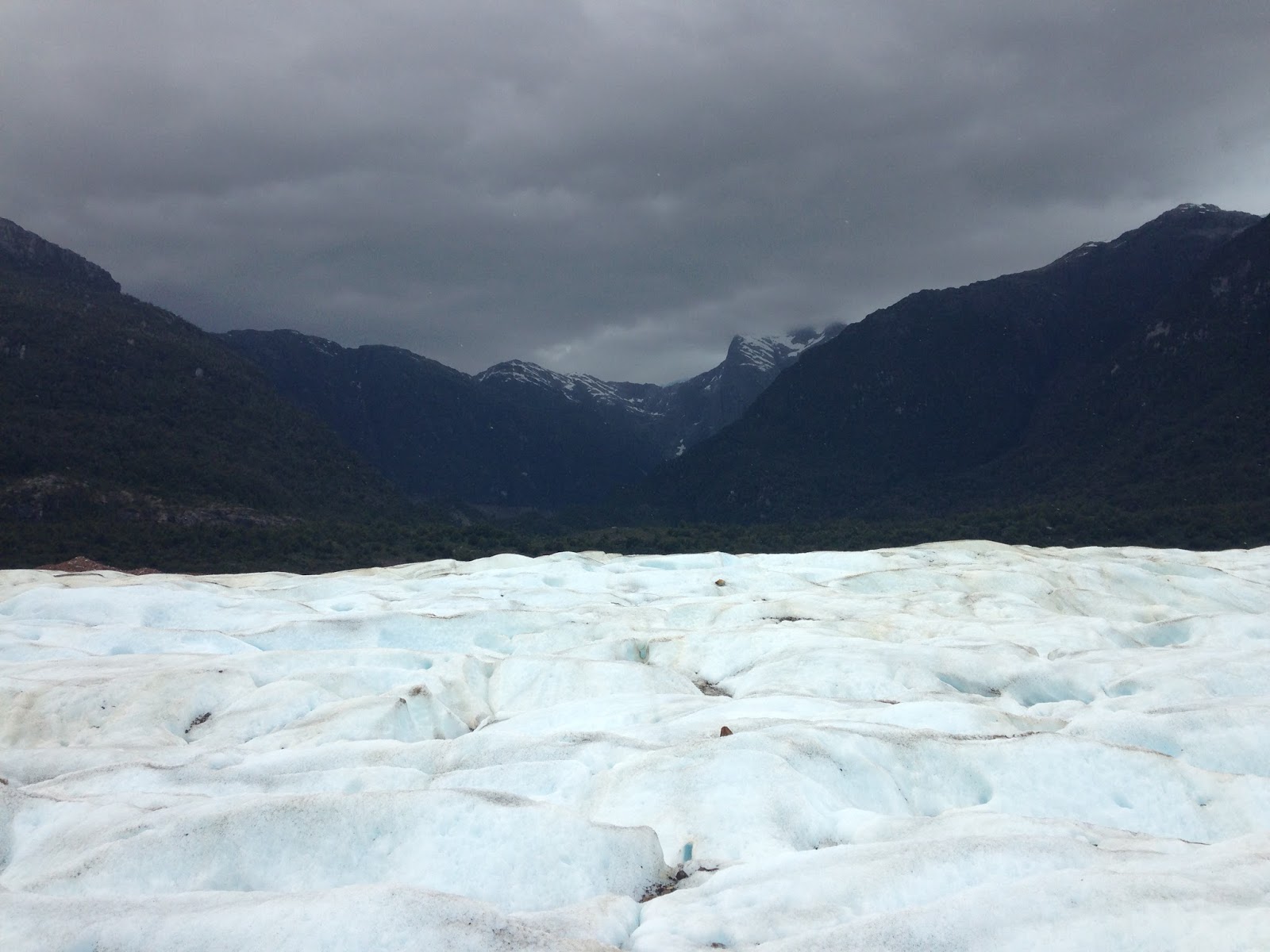
I’m not super great at nature, so it was intense for me. I even surprised myself by strapping on some crampons and walked up a glacier. 

Glacial Exploradores, Chile

Though we didn't make it to Torres del Paine on that trip, we had a gorgeous couple of weeks. Southern Chile is full of impressive natural settings on the grand scale.

Now that I've had a small taste, I will be sure and set aside time for exploring on every visit from now on. Te lo juro!

Saturday, December 30, 2017

Best Work Cafes in Siem Reap

Are you a digital nomad headed to Siem Reap? Are you worried about internet connectivity while you stop by to see the famous Angkor ruins?

I spent over a month working remotely from Cambodia. Despite what much of the internet says, the power outages and horror stories must be outdated. You will be relieved to discover that Siem Reap is well-connected city to work from. There is plenty of strong WIFI to be found in Cambodia, and countless cafes where you can find it.


What Are the Options? 


As a digital nomad, you have two choices: coworking spaces or coffee shops.

If you have minimum speed requirements or if you teach online, I'd suggest heading straight for a coworking space in Siem Reap. I wrote a post about my experience at the coworking spaces here.

If you just need some decent wifi to get you through a work day, then read on.

What Makes a Cafe Work Space "the Best"?


Coffee is not a factor here. This is specifically about which cafes are good for work.

So how do you rate it? 

Well, if you are crazy like me, you make your own personal algorithm. I assigned a score of 0-3 to every little thing about a cafe that I prefer. Then I put it on a spreadsheet and tallied the results.
Here are my picks.

1. Pages Cafe & Rooms (Score 2.5/3.0)
location SE side of town, off Wat Bo Road across from Viroth's hotel 
Pages Cafe has bikes for rent if you're interested

Pages was my favorite spot by far. They had everything I love about Siem Reap and nothing I didn't.

They are located in my favorite part of town--away from the backpacker areas and away from Pub Street. The prices aren't aimed at gouging foreigners (full breakfast spread including coffee and juice for $5) and the smoothies were good typing fuel. 

The staff was extremely nice. I had a chat one evening with a server named Socheat who said good things about the owners--a group of Khmer architects who designed an upscale hotel on the same block. 

For work, it was perfect. I sat in the corner for hours typing and chattering away on Skype and the staff would check on me periodically. The building is open to the air but stayed cool even on hot days.

Some people staying in the Rooms would have a drink, but Pages was never busy. Even so, there are plenty of electrical outlets under the benches and along the perimeter in case it gets full.

mocha frappe

me + mint lime smoothie + my laptop


2. Green Home Coffee (Score 2.5/3.0)
location N of town, on the western river road past Phum Trang Market
3rd floor work space

This Khmer-owned coffee shop opened shortly before I arrived in Siem Reap. It was directly opposite my street on the river. I didn't have to bike into town just to work.

Although they have the the tiny circle tables that I hate, the cafe was so empty that I just grabbed two tables and stuck them together. Voila! Space for both laptop and coffee, far away from each other.

There is a bathroom in the 3rd floor work space so you don't have to come down from your perch all day long. 

The staff are nice. The coffee was good. Plenty of power sockets. Mostly empty. Lovely.

Green Home Coffee has 3 floors of tranquil work space


3rd floor area


3. Little Red Fox Espresso (Score 2.5/3.0)
location downtown, west of the river before the Old Market
2nd floor work space

Australian-owned and Khmer-managed, this little shop is a powerhouse in the local coffee scene. They have barista awards on the wall but without a drop of pretension. 

As for a work space, the second floor is a cozy spot to sit with your laptop. There are a few small and one large communal table to work from, all with plugs nearby. It's cute and classy and air-conditioned. There is even a small open-air veranda to take breaks.

The cafe participates in the local music scene by selling tickets for shows. After buying tickets for Cambodian Space Project that didn't have a printed date, one of the baristas went out of his way calling venues to find the correct date for me. All the service was friendly and fast.

Little Red Fox Espresso also has posters on the bathroom walls about how to be a good tourist in SE Asia (i.e. by avoiding orphanages and being aware of the exploitative use of children by NGOs and volunteerism). As a place that attracts expats and well-to-do tourists, it's nice that they educate their customers.

A foreigner magnet with award-winning coffee, you can imagine that the prices skew higher than the rest of my list. For me this was important because I was there for a month and trying to keep costs low.

---

So that's it. My top 3 Best Cafe Work Spaces in Siem Reap. I'll follow up with a list of Honorable Mentions--there are a lot. 


How about you? Do you have any recommendations for work cafes around the world?

Friday, December 29, 2017

Coworking Spaces in Siem Reap

Are you a digital nomad headed to Cambodia? Are you looking for a coworking space for work in Siem Reap?

My girlfriend Stacy and I spent a month working remotely from Cambodia. Lots of travelers will stop in Siem Reap to see the famous Angkor ruins, so I am sharing our experiences with the coworking spaces available in town.

Coworking Spaces in Siem Reap

I looked for information before heading to Cambodia and found a decent blog by Chris the Freelancer about his week as a "digital nomad" in Siem Reap in 2016. Using his post as a starting point, we spent a week visiting coworking spaces and then worked happily the rest of the month. For those who only have a few days to get into town, work their hours, and see some sights, I hope this helps you out.

Work Space Requirements

Everyone's needs are different. Here is a quick breakdown of what we were looking for, so you can compare.

Stacy:
  • teaches English online for a Chinese company with a hefty teaching platform
  • required by contract to have min. 10 MBPS upload & download speeds
  • stable connection--no dropping student calls or power outages allowed
  • private room--it's rude to talk out loud, repetitively in a common space
  • works in 5-hour shifts so time limits on private rooms aren't cool

Alison (me):
  • writes web content for a software development company 
  • no speed requirements; cloud-based EMS
  • Skype for short phone calls & some light screen sharing
  • writes for 4+ hours at a time so a busy place with time limits is bad
  • prefers ambient noise so phone calls aren't intrusive to other workers

Stacy is the one who needed a dedicated work space. I was fine anyplace that had decent wifi. In fact, I ended up working from various locations throughout the month.

These are the four dedicated coworking spaces in Siem Reap, Cambodia.

BioLAB Coffee & Office
location in town on Wat Bo Road on the east side of the river
Hours: 7am - 10pm daily
Cost: free!
Private Room: $15/day
2nd floor work space, glass doors go out onto the terrace

BioLAB is a coworking space upstairs and cafe downstairs. This means that to work in the common space, there is no fee or membership required. The second floor is a huge area with booths, plants, large coworking tables, and plenty of power sockets. I never saw it full.

BioLAB also has a private "VIP" room. You can use it for a whole day with a minimum food or drink purchase of $15 (per day). They seem open to negotiating this price, but they don't really offer half-day prices. If you want the room, it's blocked off for you alone. If somebody else has the room, there isn't really a calendar or schedule in place for sharing hours.

I worked at BioLAB for a few days straight. The staff are super friendly. Even after you drink your coffee, they will continuously refill your water for hours without any rush to leave or purchase more.

Since it was created for working, there is minimal talking and no music. The space is quiet and safe. I left my computer out on the table to take a smoke break or go to the restroom without a problem.

They serve decent Khmer and Western food if you get hungry, and of course all the cafe drinks you can imagine. BioLAB is also 100% Khmer owned by a man named Samnang. Samnang told me they have a happy hour called "Craft Beer Time" from 6-10pm daily, although I never knew about it at the time so I didn't partake.

Overall it was my favorite coworking space for my needs.

2nd floor work space

1st floor cafe area
coffee + free water


me, working long hours at BioLAB

view from the 2nd floor terrace, good spot to take a cigarette break + people watch


Garage Society Coworking Space
location in town 2 blocks east of the river behind the King's Road restaurant complex
Hours: 9am - 6pm Monday through Saturday for daily use; 24/7 for members
Cost: $5/day (discounted for less hours), $25/week, $40+/monthly membership
Private Room: $5-8/hour daily rate with 3- and 5-month discount bundles
common work space

Garage Society is a newer coworking space located above the Lub*D hostel. It runs on high-speed wifi which is piped in via fiber optic cable.

The common room has large tables with plenty of power sockets for laptop work.

Garage Society also has a private meeting room that is well-equipped with a smart board and projector for presentations. You can reserve it ahead of time for presentations or personal use. In November they were open to negotiating the price, but I imagine this will change as the space becomes more popular and gets booked up.

Stacy worked at Garage Society exclusively because it was the only space that met all her needs. She loved the location close to town. The staff were nice and friendly. The Lub*D staff also remembered her and did helpful things like open the doors early before she arrived on Sundays.

They have a free water cooler in the common room and a bathroom on-site. Downstairs you can order drinks from Little Red Fox Espresso (award-winning coffeeshop) or from the Lub*D bar.

Garage Society in Siem Reap is the second overseas location for a Hong Kong-based coworking company, with another location in Phuket, Thailand and a location in the Philippines is coming soon. Members at this coworking space get free use of the Lub*D swimming pool and discounts at local restaurants.

Stacy worked in the private meeting room at Garage Society.

private meeting room (available for a fee)

view from the landing in front of the work space

restroom for coworkers

perks: members get unlimited access to the pool at Lub*D hostel


AngkorHUB Coworking & Co-Living
location backpacker/night market neighborhood at the southern tip of town
Hours: 8am - 6pm Monday through Saturday for daily use; 24/7 for monthly members
Cost: $8/day,  $25/week, $89/monthly membership
Private Room: $5/hour, rotates use with other coworkers--no block bookings
indoor work space

Neither myself or my girlfriend spent time working at AngkorHUB. Coming into Siem Reap, it looked like AngkorHUB was the front runner. After the initial visit though, it dropped off our radar.

First of all, at USD 89/month it's the most expensive of all the coworking spaces in Siem Reap.

Second, everyone was seated outside on the patio (no air-conditioning) with extension cords for laptops and fans running all across the floor. I'd hate to think anyone paid to work outdoors in the Cambodian heat. One could argue that the patio is more welcoming than the drab indoor area though; this work space has all the charm of a college kid's first dorm room.

Finally, the staff was rude. We showed up asked about prices for the month. The main guy (owner?) was working on his computer and acted like we were interrupting him with our questions. He barely looked up to answer.

We explained that my girlfriend needed a private space with a specific internet speed in order to do her job. He scoffed at her, because "nobody actually needs that kind of speed". Another customer spoke up, saying he also needed over 20 mbps for what he was working on. The rude guy ignored the comment and without getting up or taking his eyes off his own screen, he told us to check the speed posted on the AngkorHUB website if we needed proof.

We pulled up the site, showing a screenshot of the upload/download speeds. So, not only was this "proof" not a live speed reading, but it could have been a screenshot from literally anywhere. Before you fork over $90, you'd want to see the real thing, right?

The woman on staff, meanwhile, was helpful by stopping her personal work and pulling up a speed test on her computer.

Note: the AngkorHUB website claims they have the fastest internet in Siem Reap, but every coworking space in town is using the same fiber optic technology. 

The staff lady also showed Stacy the a private "Skype room", which is not fully-enclosed due to design cut-outs in the wall. If you need privacy for work phone calls or online teaching lessons, it's not a good fit.

After that visit, we didn't bother working there. It wasn't anywhere I'd want to spend my time or money.

Just before leaving Siem Reap I stopped by and asked if I could photograph the space for a blog. The same rude guy asked me what I was going to write about ("I'm making a list of coworking spaces in Siem Reap"), wasn't at all interested in giving me information for my write-up (aren't I his target customer?), made a dry comment about "make sure it's a good picture," and that was that.

It may be a fit for a certain kind of person, but AngkorHUB was not a good choice for either of us.

indoor work space

outdoor work space as you approach from the road


The 1961 Coworking & Art Space 
location is on the western river road north of town just past Phum Trang Market

Although it was the nearest work space to my apartment, I was surprised to find The 1961 closed "for renovation" during the month I was in Siem Reap. I never actually saw any action or construction going on in November, so I'm not sure if it will re-open. I couldn't find information about the end of the closure from on-site staff. Their website the1961.com has an expired domain.


So there you have it. Those are the four dedicated coworking spaces that I was able to check out in Siem Reap. Do you know of any others?

As mentioned, I didn't end up needing a dedicated work space, since I found strong wifi all over town. I spent most of my time working from BioLAB and coffee shops. Read my posts about my Top 3 Work Cafes in Siem Reap or More Work Cafes in Siem Reap for more info.

Wednesday, December 27, 2017

the GFW

The GFW (Great Fire Wall of China) is real.

This week I haven't had access to any Google applications (including Blogger), social media (Facebook, Instagram, Twitter, etc. etc. etc.) I have a VPN that sometimes works. Here was my first Facebook post from behind the GFW:

DOESN'T work in China: Google (Play Store, Mail, Docs, Drive, Chrome, Blogger, Google search engine, etc.), Whatsapp, LINE, YouTube, Facebook, Instagram, Twitter, Viber, and anything that requires confirmation through my Gmail (Skype, bank accounts, PayPal, etc.)
DOES work: Bing, Yahoo, WeChat, Airbnb, Runkeeper
DOWNLOADED since arriving: Baidu, Baidu Maps, Didi (Uber copy)--all in Chinese

Baidu's apps take up too much space on my phone. Baidu Maps drains my battery...but I have no other choice. I have to use it, because it's the only map I have access too. I'm using Yahoo for the first time since 1996 #ffs There's nothing I can do about it. I can't download apps that aren't made in China. This is how the Chinese government has decided that my internet access will be restricted. My paid VPN service works once every few days. I feel closed off from the rest of the world.

I followed the post with panicked warnings about what the US is going to look like if we don't save #netneutrality 😆

I've had a couple of days to get used to being disconnected. I've stopped fretting over Yahoo Search. I get lost a lot since I can't read the map. Nobody would know if I died inside the GFW. Other than these steps back in time in global connectivity, it's actually not so bad.

our neighborhood Beixin Hutong in Beijing, China

a main road connecting some hutongs in Dongcheng District, Beijing

walking around, enjoying the first cold weather in 4 years: about 0C/32F

Wangfujing, a fancy shopping area, 15 min walk from the Forbidden City

When I told people I was thinking of going to China for a month, the most common response was, “Why?!” That's the reason we came.

In China we are just trying to get a feel for what is going on inside this country. Even for Asia, China is an outlier: insular, massive, “Communist”, and famous for bad manners. 

Those things are anecdotal. What is interesting about China is that it’s both futuristic and stuck in the past--as far as globalization is concerned. China charges ahead with technology but doesn't bother to connect to the rest of the world as they do it, which is unique in the world today.

On one hand we have discovered that Beijing works almost entirely without cash. It's the closest thing to a cashless society that I've ever seen. Senior citizens are paying for groceries and hot tea with their phones. Street vendors would rather take money through the Chinese social media WeChat Wallet rather than paper cash. Entrance to the Imperial Palace (the “Forbidden City”) is done by QR code. There is smartphone interaction, automation, and CCTV everywhere.

QR codes on everything--this is a band poster for a holiday show

QR code payment to get into the Forbidden City (Imperial Palace)

Tiananmen Square--under the watchful eye of Chairman Mao + a lot of cameras

On the other hand, without access to global social media giants I am reduced to searching the internet using search engines that peaked in 1996 and searching maps by using Baidu, which has no translation capabilities. As a foreigner, I'm used to my technology adapting to my language abilities as I travel. China is the first place I haven't had this convenience.

Most countries I've been in Asia place a high value the "tourist dollar" and try to cater to foreigners. In China, it seems, this aspect of the tourism industry has been overlooked.

So I can look at a map but I can’t read it. I can use a translation app to display real-time translations of a Chinese menu and point to what I want to order, but I can’t post my dinner to Instagram. I dry my clothes on a drying rack in the freezing cold courtyard and I pay for my hot coffee without human interaction. This is the weird dichotomy of China for me.

order + pay for your coffee at a kiosk using your smartphone (no cash transaction)

Beijing metro is super efficient. the 2nd longest metro network in the world, after Shanghai. 

I’ve only been here a week but I’m beginning to see why China has closed off to the Western world the way it has. They have to preserve their own economy in the face of Western giants like Apple, Google, Facebook, and Microsoft. In China, Tencent rules the roost. It’s just survival.

China is one of the first countries I’ve been to in Asia that doesn’t seem Westernized. Thailand watches American and UK media, South Korea listens to American pop music, and China remains…well…very Chinese. China is almost sidestepping social media users' demand for globalization merely by limiting their youth's access to the rest of the world. They simply refuse to deal with Western social media. Incredible. 

As a result, have they been able to develop technologies that help Chinese people specifically instead of technologies that are being demanded by the entire world? Perhaps. Maybe that is why this country is so fascinating to me. China is hurtling into the future--more than I was aware of as an outsider--but with a tunnel-vision that I haven't encountered in Asia before.

What do you think? How do you think China's internet policies fit into an increasingly globalized world?